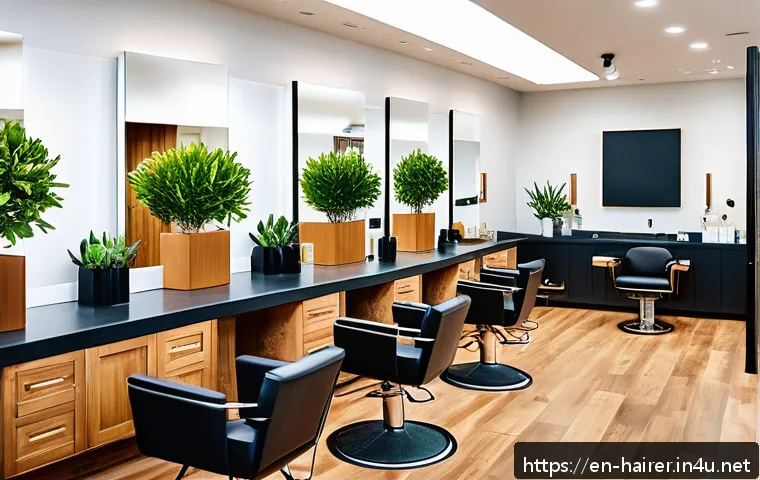
Remember when a visit to the hair salon was just about the scissors and a quick chat? Honestly, I’ve been utterly fascinated, almost thrilled, watching how rapidly technology is reshaping even the most personal industries.
From my own experiences observing stylists and talking to clients, the integration of cutting-edge IT isn’t just a trendy buzzword; it’s fundamentally changing how we approach beauty and personalization.
We’re talking about AI-powered consultations suggesting styles based on your unique features, or augmented reality mirrors letting you ‘try on’ a new color before committing.
This isn’t just about efficiency; it’s about elevating creativity and client satisfaction to a whole new level, pushing the boundaries of what’s possible.
It’s a wildly exciting, sometimes challenging, frontier for anyone passionate about hair. Let’s delve deeper into how this fusion is shaping the future.
The Digital Mirror: Hyper-Personalization Through AI and AR

The shift towards truly personalized beauty experiences isn’t just a trend; it’s a full-blown revolution, and I’ve watched it unfold with genuine amazement.
Gone are the days when a client would walk in, vaguely describe “something different,” and hope for the best. Now, thanks to incredible advancements in artificial intelligence and augmented reality, that conversation has transformed into something much more precise, more exciting.
I’ve had countless discussions with stylists who used to spend precious consultation time trying to visualize abstract ideas, only to find the client still wasn’t quite sure.
The technology we’re seeing now, like AI-powered tools that analyze facial structure, skin tone, and even lifestyle to suggest optimal cuts and colors, is nothing short of a game-changer.
It takes the guesswork out of the equation, making the process feel less like a gamble and more like a tailored, scientific approach to beauty. From my own observations, when a client can ‘see’ themselves with a vibrant new shade or a dramatic chop before any scissors touch their hair, the confidence, the excitement, is palpable.
It’s about building trust from the very first interaction, ensuring that the vision in their head matches the reality in the mirror. This isn’t just about efficiency; it’s about transforming client expectations and delivering an experience that feels truly bespoke and incredibly satisfying.
1. Vision Boarding in Real-Time: Augmented Reality Try-Ons
Remember flipping through countless magazines, trying to imagine how a celebrity’s haircut would look on you? I certainly do, and honestly, it was always a bit of a crapshoot.
Now, salons are embracing augmented reality mirrors and apps that allow clients to “try on” various hairstyles and colors virtually, in real-time. It’s like magic, but it’s pure technology.
I’ve seen clients literally gasp when they see a wild turquoise shade perfectly superimposed on their hair, or a chic bob instantly appearing. This isn’t just a novelty; it fundamentally changes the consultation dynamic.
Instead of vague descriptions, stylists and clients can now point to exact virtual styles, adjust lengths, experiment with different tones – all without commitment.
It truly empowers the client, giving them a level of control and visualization they never had before. From a stylist’s perspective, this tool is invaluable because it minimizes misunderstandings and boosts client confidence, leading to happier outcomes and fewer second-guessing moments post-appointment.
It saves time, reduces product waste from color corrections, and frankly, it just makes the whole experience a lot more fun and interactive.
2. AI-Driven Analysis: Decoding Your Unique Beauty Profile
Beyond just trying on styles, I’ve been fascinated by how AI is delving deeper into personalized recommendations. I’m talking about sophisticated algorithms that can analyze everything from hair texture, density, and growth patterns to facial symmetry and even the natural undertones of your skin.
I’ve heard stylists rave about how these tools provide an objective, data-driven foundation for their creative suggestions. Imagine an AI scanning your face and, within seconds, suggesting specific cuts that flatter your jawline, or color palettes that complement your eye color and skin tone, even considering the fading pattern of certain dyes.
This isn’t replacing the stylist’s artistic eye; rather, it’s arming them with an unprecedented level of information and precision. It’s about merging human artistry with algorithmic insight to craft a look that is truly, scientifically, perfect for the individual.
I’ve seen it lead to some truly stunning transformations, where clients walk out feeling like their hair isn’t just a style, but an extension of their unique identity.
Beyond the Chair: Streamlining Operations and Enhancing the Salon Experience
It’s not just the artistic side of hair design that’s being revolutionized; I’ve personally seen how technology is absolutely transforming the operational backbone of salons, making them run smoother, smarter, and far more efficiently.
I used to observe salon owners grappling with overflowing appointment books, inventory nightmares, and endless paperwork. It was chaotic, stressful, and frankly, took away from the actual craft of hairdressing.
But now, with intuitive software and integrated platforms, many of these pain points have simply vanished. This isn’t just about saving a few minutes here and there; it’s about reclaiming valuable time for stylists to focus on their clients and for owners to strategize for growth.
The peace of mind that comes with knowing your schedule is optimized, your inventory is tracked, and your client communication is seamless, is immeasurable.
It allows everyone in the salon to breathe a little easier and dedicate their energy to what they do best: creating beautiful hair and fostering incredible client relationships.
1. Seamless Scheduling and Client Management Systems
Honestly, I remember the days of paper appointment books filled with scribbled notes and crossed-out names – a logistical nightmare! The relief I’ve seen among salon managers and receptionists now, with robust online booking and client management systems, is palpable.
Clients can book, reschedule, or cancel appointments themselves, 24/7, reducing phone calls and freeing up front-desk staff for more valuable tasks. But it goes deeper than just booking.
These systems often store comprehensive client profiles, including past services, preferred products, color formulas, and even personal notes about their preferences or conversation topics.
I’ve heard countless clients express how impressed they are when a stylist remembers a detail from their last visit, even months later. This isn’t just good memory; it’s smart tech empowering genuinely human connection.
It builds loyalty and makes every visit feel incredibly personal, contributing significantly to that crucial client retention.
2. Smart Inventory and Product Management
Managing salon inventory used to be a monumental headache – tracking professional products, retail items, and ordering supplies before running out. I’ve spoken with salon owners who spent hours each week manually counting bottles and jars.
Now, advanced inventory management software integrates directly with point-of-sale systems, automatically updating stock levels with every sale or service.
This means precise reordering, reduced waste from overstocking, and ensuring popular products are always available for clients. I’ve also seen systems that analyze sales trends, helping salons identify their best-selling products and optimize their retail displays.
This isn’t just about efficiency; it’s about turning inventory from a cost center into a profit driver, ensuring that a salon never misses a sale because a key product is out of stock.
It’s a subtle but powerful way technology directly impacts the bottom line and ensures a smoother operation.
Cultivating Community and Driving Engagement: The Social Salon
The modern salon isn’t just a place to get your hair done; it’s increasingly becoming a hub for community, a source of inspiration, and a powerful brand in its own right.
And from what I’ve observed, technology is the engine driving this transformation. I’ve seen stylists, once confined to their chairs, now blossom into digital content creators, sharing their artistry and building massive followings.
This isn’t just about superficial likes; it’s about building genuine connections, educating clients, and extending the salon experience far beyond the physical premises.
The ability to showcase talent, share tips, and interact with a wider audience has opened up unprecedented opportunities for growth and brand recognition.
It feels less like traditional marketing and more like authentic community building, which resonates so much more deeply with today’s consumers.
1. Leveraging Social Media for Brand Storytelling and Client Connection
I’ve seen firsthand how social media has become the ultimate digital portfolio for stylists and salons. It’s where they showcase their most stunning transformations, share behind-the-scenes glimpses of salon life, and offer valuable hair care tips.
I often hear clients say they discovered their stylist through Instagram or TikTok, drawn in by their unique aesthetic and relatable personality. This isn’t just about pretty pictures; it’s about storytelling.
Stylists can share their passion, their creative process, and even their emotional connection to their craft. It builds a powerful, authentic brand image that attracts like-minded clients.
Moreover, these platforms facilitate direct interaction – clients can ask questions, leave reviews, and even participate in virtual Q&As. This constant, casual engagement builds a loyal community, making clients feel connected to the salon even when they’re not physically there.
2. Email Marketing and Loyalty Programs: Building Lasting Relationships
While social media is great for broad reach, I’ve noticed the quiet power of more direct digital communication through email marketing and CRM-driven loyalty programs.
I’ve personally received personalized emails from my salon about seasonal promotions, new product launches, or even just a friendly reminder for a pre-booked appointment, and it always makes me feel valued.
These aren’t generic blasts; they’re often tailored based on my past services or purchase history. Similarly, digital loyalty programs that reward repeat visits or product purchases are incredibly effective.
Instead of flimsy punch cards, clients can now track their points and redeem rewards effortlessly through an app or online portal. This not only encourages repeat business but also provides valuable data for the salon to understand client behavior and tailor future offers.
It’s about nurturing relationships, ensuring clients feel appreciated and incentivized to keep coming back.
Enhancing Education and Upskilling: Empowering Stylists with Digital Tools
The world of hair fashion is constantly evolving, and keeping up with the latest techniques, trends, and product innovations has always been a challenge for stylists.
I’ve heard countless stories from experienced professionals about the struggle to find time for in-person workshops or expensive seminars. But what I’ve seen recently, thanks to technology, is a democratized approach to education that is truly empowering.
Digital learning platforms, virtual reality training modules, and online masterclasses are breaking down barriers, making high-quality education more accessible and flexible than ever before.
This isn’t just about staying current; it’s about fostering continuous growth and ensuring that stylists can constantly refine their craft, learn new skills, and ultimately deliver even more exceptional results for their clients.
It’s exciting to witness this shift, as it ensures the industry remains vibrant and at the forefront of innovation.
1. Online Masterclasses and Virtual Training Platforms
I’ve personally witnessed the immense value that online masterclasses and virtual training platforms bring to the beauty industry. Top stylists, who might otherwise be inaccessible, are now sharing their expertise through high-definition video tutorials and interactive online sessions.
This means stylists, even those in remote areas or with tight schedules, can learn advanced cutting techniques, intricate color theory, or innovative styling methods from the comfort of their own homes or salons.
I’ve spoken with many professionals who feel these platforms are a game-changer for their professional development, allowing them to pause, rewind, and re-watch complex demonstrations until they’ve mastered the skill.
It’s incredibly flexible and cost-effective compared to traditional workshops, opening up a world of continuous learning that keeps their skills sharp and their creativity flowing.
2. Interactive AR/VR Training for Practical Skill Development
While online videos are fantastic, I’ve been particularly impressed by the emergence of augmented and virtual reality in practical skill development. Imagine a new stylist practicing intricate braiding patterns or complex coloring techniques on a virtual head, receiving instant feedback on their precision and application, all without wasting precious product or requiring a live model.
This isn’t widespread yet, but I’ve seen prototypes and heard about early adoption, and the potential is immense. It provides a safe, low-stakes environment for repetition and refinement, allowing stylists to build muscle memory and confidence before working on actual clients.
This kind of immersive, interactive training is truly revolutionary, bridging the gap between theoretical knowledge and practical application in a way that traditional methods simply can’t.
The Green Revolution: How Tech Is Making Salons Sustainable
It’s a topic close to my heart, and frankly, something I’ve been actively looking for in the salons I visit: sustainability. The beauty industry, historically, hasn’t always been the poster child for eco-friendliness, with significant water usage, chemical waste, and energy consumption.
But what I’ve been thrilled to observe is how technology is becoming a powerful ally in the green revolution within salons. This isn’t just about good PR; it’s about tangible changes that reduce environmental impact, save resources, and even improve the health of both stylists and clients.
From smart water systems to energy-efficient appliances and digital record-keeping, every little bit adds up, creating a more responsible and future-proof business model.
It truly feels like a collective effort, driven by innovation, to ensure beauty doesn’t come at the expense of our planet.
1. Smart Water Management and Energy Efficiency
I’ve been genuinely impressed by how some modern salons are integrating smart technology to drastically reduce their environmental footprint. Think about the sheer amount of water used in a busy salon – it’s astronomical!
But now, I’m seeing innovative showerheads that optimize water flow without sacrificing pressure, and intelligent water recycling systems that treat and reuse water for non-potable uses.
Beyond water, energy efficiency is a huge focus. LED lighting, smart thermostats that adjust based on occupancy, and energy-efficient appliances like washers and dryers are becoming standard.
I’ve heard salon owners talk about how these investments not only reduce their utility bills significantly but also align with their personal values and attract environmentally conscious clients.
It’s a win-win for their business and for the planet.
2. Digital Transformation for Reduced Waste
Consider the amount of paper waste generated in a traditional salon: appointment cards, client forms, marketing flyers. I’ve seen this mountain of paper dwindle dramatically thanks to digital transformation.
Online booking, digital client intake forms, email receipts, and digital marketing materials eliminate the need for paper, reducing waste and clutter.
Furthermore, technology plays a role in precise product dispensing systems that minimize chemical waste from color and treatment applications. Instead of guessing, stylists can use digital scales and dispensers to mix exact quantities, ensuring less product goes down the drain.
This meticulous approach not only saves money on supplies but also significantly reduces the environmental impact of chemical runoff. It’s a testament to how small technological shifts can lead to substantial ecological benefits.
The Business of Beauty: Driving Revenue with Integrated Tech Solutions
Let’s be honest, at the end of the day, a salon is a business, and profitability is key. What I’ve really focused on observing is how technology isn’t just about making things look good or run smoothly; it’s fundamentally about driving revenue and creating a more financially robust enterprise.
I’ve seen too many talented stylists and salon owners struggle with the business side, but now, smart tech solutions are providing insights and opportunities that were once unimaginable.
This isn’t just about cutting costs; it’s about identifying new revenue streams, optimizing pricing, and understanding client spending habits in a way that leads to sustainable growth.
It’s about empowering salon owners to be not just artists, but astute business leaders, leveraging data to make informed decisions that directly impact their bottom line.
1. Data Analytics for Informed Business Decisions
I often hear salon owners talk about “gut feelings” when it comes to business decisions – what products to stock, what services to push, when to offer discounts.
But I’ve seen a powerful shift as they embrace data analytics. Integrated POS (Point of Sale) systems and client management software now provide incredibly detailed insights into sales trends, peak booking times, average client spend, and even the profitability of individual services or products.
This isn’t just a jumble of numbers; it’s actionable intelligence. I’ve seen salons use this data to optimize staffing schedules, identify underperforming services that need a refresh, or pinpoint their most loyal, high-spending clients for targeted promotions.
It takes the guesswork out of strategy, allowing owners to make decisions based on concrete evidence, which ultimately leads to more effective marketing, better resource allocation, and increased revenue.
2. New Revenue Streams: Online Product Sales and Virtual Consultations
The salon experience is no longer confined to four walls, and I’ve seen technology unlock entirely new revenue streams for savvy businesses. Many salons are now seamlessly integrating e-commerce platforms to sell their professional-grade hair care products online.
This means clients who love a product can repurchase it anytime, anywhere, extending the salon’s reach beyond their immediate geographical area. I’ve also seen a rise in virtual consultations, especially for complex color corrections or hair extension discussions.
While not always directly monetized, these virtual touchpoints often lead to booked appointments and product sales. They expand the salon’s reach and provide a convenient option for clients, particularly those with busy schedules or who live further away.
It’s about meeting clients where they are, digitally, and capitalizing on every touchpoint.
| Aspect | Traditional Salon Approach | Tech-Enhanced Salon Approach |
|---|---|---|
| Consultation | Verbal discussion, magazine photos, trial & error. | AI facial analysis, AR try-ons, data-driven recommendations. |
| Bookings | Phone calls, paper appointment books, limited hours. | Online 24/7 booking, automated reminders, self-service. |
| Client Data | Physical cards, fragmented notes, limited recall. | Digital profiles, comprehensive service history, preferences, automated follow-ups. |
| Inventory | Manual counts, guesswork, potential for over/under-stocking. | Automated tracking, sales trend analysis, precise reordering. |
| Stylist Education | In-person workshops, limited availability, high cost. | Online masterclasses, VR training, continuous digital learning. |
| Sustainability | Standard water/energy use, paper waste. | Smart water systems, energy-efficient tech, digital documentation, precise product dispensing. |
| Marketing & Outreach | Flyers, local ads, word-of-mouth. | Targeted social media, email campaigns, online reviews, loyalty programs. |
The Evolving Role of the Stylist: From Artist to Tech-Savvy Creator
I’ve spent years observing the dynamic world of hair design, and one of the most compelling shifts I’ve witnessed is the evolution of the stylist’s role itself.
It’s no longer enough to just be skilled with scissors and color; the modern hair professional is increasingly becoming a tech-savvy creator, an online influencer, and a data-informed consultant.
I’ve heard stylists, some initially resistant to the digital tide, express genuine excitement as they embrace new tools that enhance their artistry and efficiency.
This transformation isn’t about replacing human talent with machines; it’s about augmenting it, allowing stylists to reach new heights of creativity, precision, and client satisfaction.
It’s a challenging but undeniably exhilarating time to be in the industry, demanding a blend of traditional craftsmanship and digital prowess.
1. Embracing Digital Tools as Extensions of Artistic Expression
From what I’ve seen, the most successful stylists today are those who view digital tools not as a burden, but as an extension of their artistic toolkit.
I’ve watched them effortlessly navigate complex booking software, utilize social media to showcase their unique artistic vision, and even dabble with video editing to create engaging content.
These aren’t just administrative tasks; they’re integral parts of building their personal brand and attracting their ideal clientele. The ability to use a tablet during a consultation to show AR-enabled styles, or to instantly access a client’s past color formula, empowers them to deliver a more precise and personalized service.
It frees up their mental space from mundane tasks, allowing them to truly focus on the creative aspect of their work and the human connection with their client.
2. The Rise of the Stylist-Influencer and Educator
It’s been incredible to watch stylists transform from just being in-salon professionals to legitimate online influencers and educators. I’ve seen countless examples of hair artists who have built massive followings on platforms like Instagram and YouTube, sharing tutorials, behind-the-scenes content, and showcasing their signature styles.
This isn’t just for fun; it’s a powerful way to build credibility, attract new clients from around the world, and even generate additional income through brand partnerships or digital product sales.
They’re becoming authorities in their niche, inspiring others and pushing the boundaries of what’s possible in hair design. This dual role – hands-on stylist and digital content creator – is defining the modern hair professional, offering exciting avenues for career growth and creative expression that didn’t exist a decade ago.
Concluding Thoughts
The evolution of the salon industry, fueled by AI and AR, is genuinely breathtaking. What I’ve seen firsthand is a transformation that goes far beyond mere efficiency; it’s about elevating the entire beauty experience.
From the initial consultation to the ongoing relationship, technology is empowering stylists to unleash their creativity with unprecedented precision and enabling clients to feel more confident and connected than ever before.
This isn’t just a glimpse into the future; it’s the vibrant reality unfolding right now, and honestly, it makes me so excited for what’s next in the world of beauty.
Useful Information
1. For clients: Don’t be afraid to ask your salon about their tech tools! Engaging with AR try-ons or digital consultation forms can truly enhance your experience and ensure you get exactly the look you’re dreaming of.
2. For stylists: Embrace continuous learning. Online masterclasses and digital resources are invaluable for staying ahead of trends and refining your craft without breaking the bank or taking extensive time off.
3. For salon owners: Invest in integrated software. A comprehensive system for bookings, client management, and inventory can streamline operations, reduce headaches, and significantly boost your bottom line.
4. Leverage social media: It’s more than just pretty pictures. Use platforms like Instagram and TikTok to tell your salon’s story, showcase your artistry, and build a loyal community that extends beyond your physical location.
5. Think sustainably: Tech solutions, from smart water systems to digital record-keeping, can dramatically reduce your salon’s environmental footprint. It’s good for the planet, and increasingly, it’s what clients expect.
Key Takeaways
The modern salon is undergoing a profound digital transformation. AI and AR are revolutionizing consultations and personalized services, while integrated software enhances operational efficiency, client management, and inventory control.
Technology also empowers stylists to become digital influencers and educators, expanding their reach and expertise. Crucially, it drives sustainability initiatives and provides data-driven insights for robust business growth, ensuring the beauty industry remains innovative and client-centric.
Frequently Asked Questions (FAQ) 📖
Q: What are some of the specific, tangible technologies we’re seeing in salons today that genuinely transform the experience for clients?
A: Oh, this is where it gets really exciting! Beyond just sleek online booking, which is a given these days, I’ve personally seen salons leveraging AI-powered diagnostic tools.
Imagine sitting down, and a scanner analyzes your hair’s porosity, elasticity, and even scalp health, then an AI algorithm suggests personalized treatment plans or colors that would truly pop with your skin tone.
It’s not just a hunch anymore; it’s data-driven art! And the augmented reality mirrors? They’re mind-blowing.
I was at a salon recently where a client literally “tried on” a vibrant copper balayage and a sharp new bob, seeing it on their own head in real-time, before a single strand was cut or colored.
It takes all the guesswork and potential “oh no” moments out of a big change. This isn’t just about efficiency; it’s about giving clients an unprecedented level of confidence in their choices.
Q: How do these advanced technologies, like
A: I consultations or AR mirrors, actually enhance the personal connection between a client and their stylist, rather than making the experience feel cold or impersonal?
A2: That’s a brilliant question, and frankly, it was a concern of mine too initially. But from what I’ve gathered watching interactions, these tools aren’t replacing the human touch; they’re enriching it.
Think of it this way: instead of spending the first fifteen minutes trying to explain a vague idea or flipping through magazines, the AI or AR system can quickly narrow down options.
This frees up the stylist to focus on the art and the connection. They’re no longer just guessing; they’re collaborating with the client based on concrete visuals and data.
“Oh, you like that shade of blonde on the AR mirror? Let’s talk about how to achieve that with your hair type and lifestyle.” It allows for a deeper, more informed conversation, building trust because the client feels truly understood and confident in the direction.
It’s like having a super-powered assistant for both parties, allowing the human relationship to flourish on a higher plane of understanding.
Q: For stylists, what’s the learning curve like with these new technologies? Is it a smooth transition, or are there significant challenges they face in adopting and integrating them into their daily work?
A: Believe me, it’s not always a walk in the park! I’ve seen stylists, especially those with decades of experience, initially balk at the idea. There’s a natural hesitation – “Am I going to be replaced by a machine?” – and then the very real hurdle of learning a new system.
It’s not just about pressing buttons; it’s about understanding how to interpret the data, how to troubleshoot, and how to seamlessly weave it into their existing workflow without making it feel clunky.
There’s an investment of time and sometimes money for training. However, the ones who embrace it, who really lean into learning, quickly see the massive upside.
It differentiates them, attracts new clients, and frankly, makes their job more precise and less stressful. It’s challenging, absolutely, but the payoff in terms of elevated creativity and client satisfaction for those who commit to the learning curve is truly remarkable.
It’s a frontier, and like any frontier, it requires guts and adaptability.
📚 References
Wikipedia Encyclopedia
구글 검색 결과
구글 검색 결과
구글 검색 결과
구글 검색 결과
구글 검색 결과